
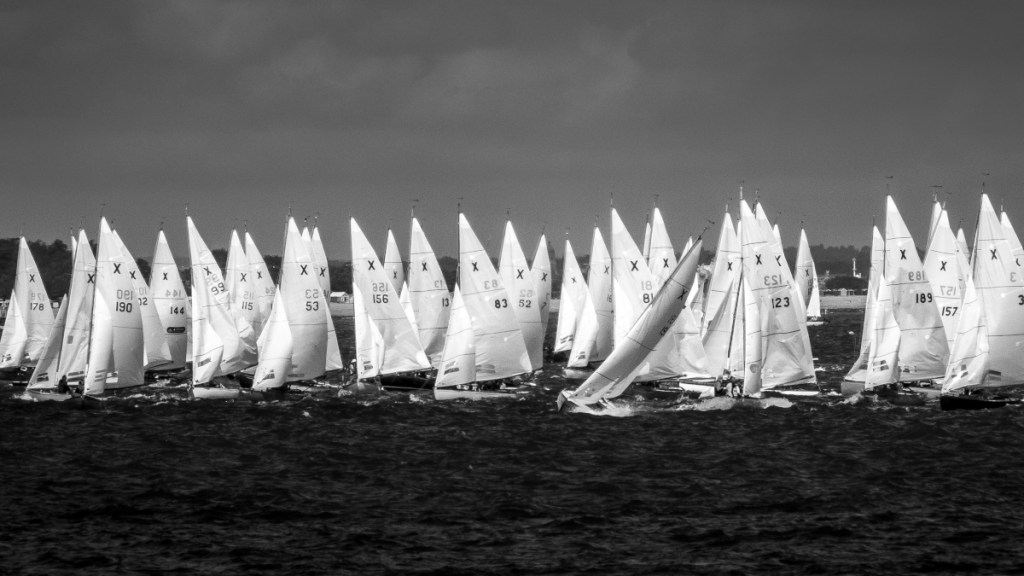
Imagine you are a ship. The hull, mast, and sails are your ‘body’; your feelings, thoughts, ambitions and aversions, wants and fears, everything that makes up your ‘soul’, are the crew. The ship needs to sail, but in order to do so the crew needs to be organised. You need to hoist the sails, plot a course, catch the wind, and navigate the seas. The ship needs a captain. Who do you put in charge? Who tells the ship what to do and where to go?
Each of the crew members thinks they have the best claim to the captaincy. Your fears and aversions think they should be in charge, because they know where the rocks are, and you could wreck yourself on these rocks if you’re not careful; there are a lot of different fears though, and they all want to go in different directions to avoid different rocks, or else remain in port. Your wants and ambitions think they should be in charge, because they know where you want to end up; again, though, there are a lot of different wants and they all want to go somewhere different, and none of them really know how to get there. Your feelings think they should be in charge and they want you to know that they are the most powerful and can take control of the ship by force if they have to, so you’d better keep them on side… Your thoughts think they should be in charge because only they are in a position to explain themselves; they don’t have to resort to a power-grab like your feelings. Some of these thoughts have useful knowledge, like being able to navigate by the stars or read a map; others are less useful, more prone to getting drunk and singing bawdy songs.
You need to appoint a captain from amongst your crew: whom do you choose?
If you appoint your fears to be your captain, you will be led blindly back and forth, always avoiding rocks but never really getting anywhere. You start heading out west with the wind, but see a rock so turn back east against the wind. You carry along that course for a bit until you encounter a storm, so you turn and head south until you see more rocks, at which point you turn north…etc. You’re going nowhere, really, and it’s hard-sailing all the way. Eventually you start to run low on supplies so have to return to safe harbour, exhausted and not very inclined to return to sea any time soon.
If you appoint your wants to be captain, you’ll set a destination, say ‘Eastport’, and head out to sea. But you don’t really know how to navigate or set the sails, so you drift about for a bit whilst you work out how to get the ship going in the right direction. In the meantime, an argument breaks out in the crew about where the ship should be sailing. They are not willing to share power. There is a mutiny. A new want is appointed captain and a new destination is set: Southport. More navigational confusion follows, so another period of drifting, until you get on track and make some headway. Maybe you even land at your destination and make port. Unfortunately, many of the crew didn’t want to be at Southport; they’d rather be at Eastport. They are disgruntled. Over a few pints in the local tavern, another fight breaks out, and the dissident crew commandeers the ship to set out for Eastport once again. But they still don’t really know how to get the ship going in the right direction, so there’s more drifting, more arguments, and you end up going round in circles. You spend most of your time either at sea or in ports dealing with drunken fights amongst your crew.
If you appoint your feelings to be your captain, you go wherever the wind takes you. There is some good sailing, as you breeze along with the wind in your sails, heading out to open water. The sun is shining and everything is just lovely. But then you hit a storm. It batters your sails and sends you wildly off course. All you can do is batten-down the hatches and hold on for dear life, hoping against hope that the storm will pass. Sometimes, the storm passes, and you can sail in sunny days again. Sometimes the storm wrecks you on some rocks. No one can predict the weather.
If you appoint your thoughts to be your captain, you find that they can be very useful. The thoughts are willing to share power and divvy up the labour amongst the crew according to their strengths. Some thoughts ensure that you are well-prepared and well-supplied before you leave harbour. Some thoughts are able to listen to the other crew members – the wants, the fears, and the feelings – and learn from them, because each can offer something useful: the wants can tell you about desirable destinations, the fears can tell you about dangerous rocks, the feelings can tell you about sailing the ship smoothly with the wind. The thoughts can negotiate with all to settle on a course or destination that satisfies most. Some thoughts have learnt to use compass, clock, and sextant, and are able to navigate by the sun and stars. Some thoughts know how best to set the sails, to catch the wind regardless of its strength or direction, even to read the weather so that you can avoid storms. Other thoughts are less useful, it’s true: they mooch about on the deck causing trouble, berating the crew and getting dead-drunk. Sometimes these thoughts go so far as to call for a mutiny and even threaten to scupper the ship! Strict discipline is needed to keep them in check. Fortunately, unlike the other crew members, thoughts require and respond to a chain of command. Higher ranking thoughts are recognised as such because they are better able to sail the ship, and because of this knowledge they are understood to be more qualified to lead. Other thoughts will obey the orders of these higher-ranking thoughts, if they are pressed, because they can recognise that it’s in their interests to do so. So long as the chain of command is maintained, it’s clear sailing and you get where you want to go.
Sailing a ship is a tricky business. Only your thoughts are in a position to know how to sail the ship, so you should really put them in charge. It is very much in our interest to be guided by our reason. Only our reason really knows what’s it’s doing. The other parts of ourselves are only good and useful if they are put to good use by reason using them in the right way.
Read more: Think Well, Live Well: A Free Introduction to Philosophy
 tobybetenson.com