

This is a sketch of sceptical theism. It is only a sketch: you will have to go and consult the literature to find this view fully and better expressed in all its glorious technical detail.
We are asking why a good God allows bad things to happen. If we’re not going to answer with a theodicy, another answer is available: we don’t know.
We don’t know why God allows bad things to happen
But we shouldn’t be surprised that we don’t know. Although we are familiar with and have little difficulty using moral concepts, we should recognise that our ability to know and understand the deep moral workings of the universe is very limited, especially compared to God’s.
God is omniscient; He has all the knowledge. By comparison, we really do not.
It’s difficult to quantify our lack of knowledge because, clearly, we don’t know how much we don’t know. But let’s take an example of something we do know and understand and use all the time without difficulty, like our words.
We know what we’re talking about when it comes to talking our own language, surely? And yet, most of us don’t know half the words in our native language, and even the most advanced linguist is very unlikely to understand more than 0.01% of the available human languages.
If we don’t even fully know something as close to us as our own language, could any of us be surprised when we come across things in the world that we can’t understand? And languages are human creations; how much more complicated is a universe! If an omniscient God created the universe, can we be surprised when His reasons work in ways that are beyond our understanding?
There are other examples of things we know how to use even though we can’t see the reasons for their working. I can use a computer, for example, but I don’t really understand how a computer works. I don’t really understand how, when I press these keys, letters appear on the screen and then get ‘saved’ in some kind of immaterial form that can be copied and transported to another computer anywhere in the world. I understand about 1s and 0s, and circuits and electricity and microchips, and that logic plays an important role in there, but my understanding is confessedly shallow. If you asked me to build a computer from raw materials, and not just assemble one from pre-made parts, I wouldn’t have the first clue what to do. And a computer is a pretty basic thing, compared to a universe. If I can’t get my head around the deep workings of something as simple as a computer, why on earth would I expect to understand the deep moral workings of the universe?
But if I can’t expect to understand the deep moral workings of the universe, how can I be surprised when I fail to fully explain those workings?
You can’t see what you aren’t in a position to see
That I can’t see any morally-sufficient reason to permit the evils of the world is hardly surprising. Would I expect to see those reasons, if they were there?
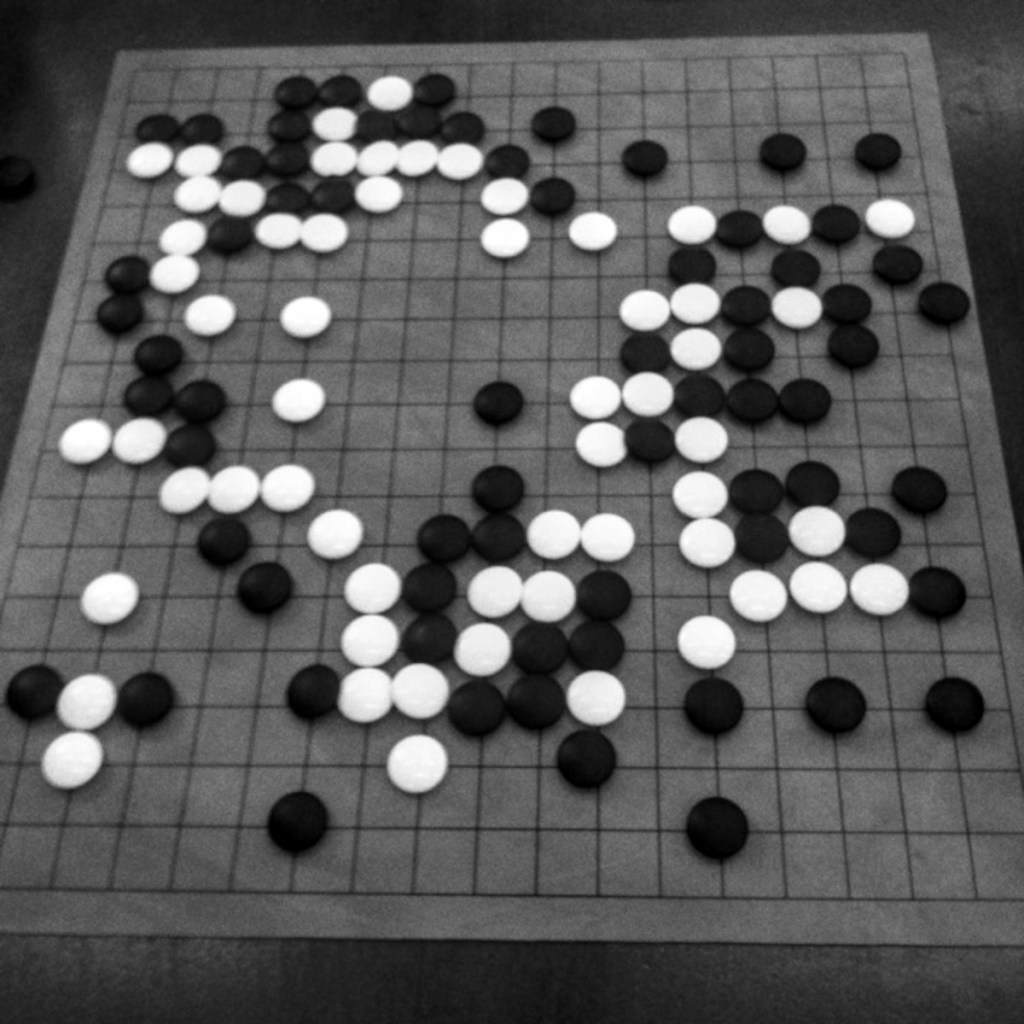
Imagine someone who doesn’t understand how to play chess not being able to see a winning move. Would their inability to see it give you any reason to believe that a winning move isn’t available?
Of course not. If there were a winning move available, the ignorant chess player wouldn’t be able to see it because they don’t understand how to play chess. So that they can’t see any winning move means absolutely nothing in terms of whether there is a winning move to be found. Presumably a more experienced or more skilled player might see things differently.
If anything, the person who doesn’t play chess would probably assume there is a winning move available – most games of chess are won, after all – but they just can’t see it because they don’t understand the game. That is, the inference goes in exactly the opposite direction. An acknowledged lack of understanding gives you some reason to doubt your perception.
Imagine talking to someone who speaks a language that you don’t understand. They are making noises and gestures but you can’t make a single bit of sense of what they’re saying. Would you infer from this that they’re talking nonsense? Would you infer that, because you can’t see any meaning in their words, there is no meaning in their words?
Of course not. You’d only think they were talking nonsense if you were in a position to understand what they were talking about in the first place. The natural reaction otherwise is simply to acknowledge that you don’t understand and leave it at that. If anything, when someone is talking to us in a language that we don’t understand, we assume they are talking meaningfully and we don’t understand because we don’t speak their language. An acknowledged lack of understanding gives you some reason to doubt your perception; in this case, quite a strong reason.
Sceptical theism works in a similar way. We look at the evils of the world and we fail to see a reason why they should be permitted. But we also acknowledge that God is in a position to know a great deal more about these things than we are. Our knowledge is extremely limited by comparison, to such an extent that we probably wouldn’t be able to understand the big picture even if it were shown to us.
If God had a reason to permit all the evils of the world, would we expect to see it? Like someone who doesn’t know how to play chess wouldn’t expect to see a winning move, or someone who doesn’t speak the language wouldn’t expect to see meaning in a foreigner’s words, we, as finite creatures, wouldn’t expect to see the deep moral workings of the universe. It’s beyond us.
That we can’t see any reason why these evils should be permitted therefore doesn’t tell us all that much about whether there is a reason, just like the ignorant chess player can’t infer that there is no winning move, and the inadequate linguist can’t infer the foreigner is talking nonsense. If anything, like the ignorant chess player and the inadequate linguist, we might assume there is a reason and we can’t see it because we don’t understand. The inference could go in the opposite direction. An acknowledged lack of understanding gives you some reason to doubt your perception.
Read more: The Problem of Evil as an Ethical Problem
Read more: The Problem: A Dialogue on the Problem of Evil
Read more: Think Well, Live Well: A Free Introduction to Philosophy
 tobybetenson.com