

Stoicism is very popular nowadays and is being sold as the solution to all of your problems, but this is because most people who are selling Stoicism don’t seem to understand what it is or what they are. They are not Stoics. They are actors; they are children playing at dressing up, so lost in their game of make believe that they have forgotten to go to school.
Sometimes they seem to forget that they are reading these ancient works in translation, at nearly 2,000 years’ distance. Sometimes things get lost in that translation. I am no expert in translating ancient languages, far from it, but I know enough to recognise when a misunderstanding has become pervasive.
For example, the opening lines of Epictetus’s Enchiridion (or ‘handbook’) look like this, in a widely-available translation:
Some things are in our control and others not. Things in our control are opinion, pursuit, desire, aversion, and, in a word, whatever are our own actions. Things not in our control are body, property, reputation, command, and, in one word, whatever are not our own actions.
Epictetus, The Enchiridion, I
The important phrase that might lead people astray is: ‘in one word, whatever are our own actions.’ Alarm bells ought to be set ringing by the obvious contradiction there: whatever is said ‘in one word’ in ancient Greek is something that takes five words to say in English. But to what ‘one word’ does this phrase refer?
In the original, the phrase ‘whatever are our own actions’ is represented in these two words: ‘hemetera erga’. ‘Hemetera’ is equivalent to ‘our’, which is an important modification but in itself says little. It’s worth a brief reflection on, though: who is Epictetus talking to? Who is ‘us’ in this scenario? Philosophers? Human beings? Are there some things in the control of a philosopher that wouldn’t be in the control of an ordinary ignorant human being? Does having more knowledge give us more power? Or does Epictetus mean his message to be universal and applicable to all? I leave it to your judgement.
The other word is ‘erga’. This is a very important word in philosophy and particularly important in the world of philosophy that the early Stoics inhabited. This is the ‘one word’ to which Epictetus’s phrase refers, the one word that captures what is ‘in our control’.
Ergon is not Always Action
‘Erga’ (a case of ‘ergon’) does not directly translate to the modern English word ‘action’, in my opinion. The philosophical connotations are different.
We think of ‘actions’ to be ‘active’ – something that you do, rather than not do, since ‘action’ is opposed to ‘inaction’, ‘activity’ to ‘inactivity’, and ‘active’ to ‘passive’, etc. – and for this reason you might be inclined to read Epictetus’s opening line, in English translation, as a call to take action and do certain things. But this is not always the case with ergon.
Moreover, we tend to think of ‘actions’ as being physical, rather than mental, insofar as we might contrast someone who ‘takes action’ to someone who only sits around thinking about things. But this is not always the case with ergon.
‘Ergon’ can be passive or mental. Aristotle, for example, says that the ‘ergon’ of the eye is to see, and whilst the eye certainly ‘does’ this, it does so passively: it has no choice in the matter, it just does what it is. And the ‘ergon’ of rhetoric is not to persuade people (an activity that makes a material difference) but only to understand how to persuade people: a mental activity.
A more accurate translation of the philosophical meaning of ‘ergon’ would be ‘function’ or ‘task’ or ‘work’. To say ‘the function of an eye is to see’ or ‘the task of rhetoric is to understand the means of persuasion’, for example, seems to capture Aristotle’s intended meaning more accurately.
And just to add to the confusion, ‘ergon’ can sometimes refer to the product of work: so the ‘ergon’ of a sculptor is a sculpture. The ‘task’ or ‘function’ or ‘work’ of a sculptor is to sculpt sculptures, and so the sculpture that results from their activity is their ‘work’ or ‘ergon’. The sculpture is a ‘work of their art’.
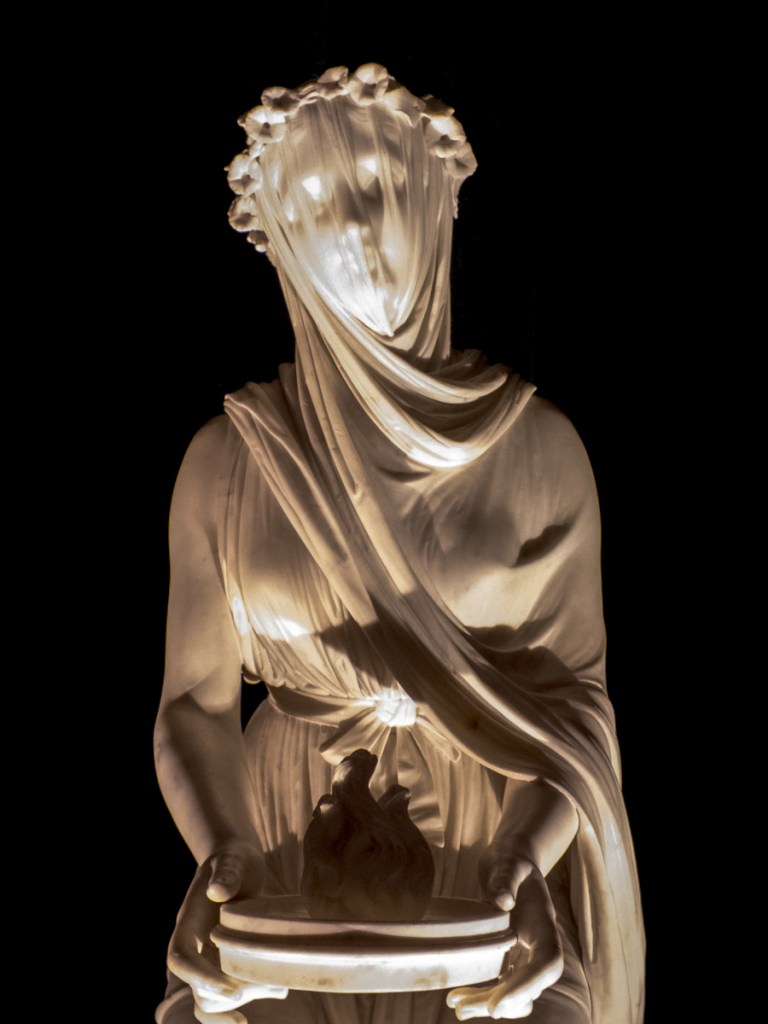
‘Ergon’ has a distinct meaning that we come to understand by seeing the various ways that ancient Greek philosophers use the word. The ‘task’ or ‘function’ or ‘work’ of an eye is to see, and so seeing is the ergon of the eye. The ‘task’ or ‘function’ or ‘work’ of a plant is to grow, and so growth or growing is the ergon of plants. The ergon of a stomach is to digest food, for the purpose of providing nutrition to the rest of the body: it fulfils its purpose when it performs this function and it fails when it doesn’t. The ergon of archery is to shoot arrows straight. The ergon of rhetoric is understanding how to persuade people. The ergon of sculpture is a sculpture. Etc., etc. Some of these are what we would nowadays describe as ‘actions’, but in many instances that word would seem to be a poor fit.
The Proper Business of a Philosopher
Exactly what the Stoics understood by ‘ergon’ is an open question, but what is clear is that ‘hemetera erga’ means our work, our function, our task, our proper business as human beings (or philosophers).
And what is our proper business as human beings? Is it to digest food? Surely we are more than a stomach. Is it to grow and reproduce, like plants? No, because we are not like plants; we are more than that. Is it to grow and reproduce and move about, directed by our instincts and urges, like animals? No, because we are not like animals; we are capable of other things.
Many philosophers at the time of the early Stoics would have understood the ‘ergon’ or ‘task’ or ‘work’ or ‘function’ or ‘proper business’ of human beings to be what defines us as human beings: our capacity for rational thought.
What we are is ‘thinking things’. Just as ‘growing’ is what a plant does, and ‘seeing’ is what an eye does, ‘thinking’ is what we do: it is our ‘ergon’, our ‘work’ or ‘task’ or ‘function’ as human beings (and especially as philosophers).
And so, to my mind and with these philosophical connotations in mind, a better translation of Epictetus’s opening lines might be:
Things in our control are opinion, pursuit, desire, aversion, and, in a word, our thinking.
That sends a very different message. I think it sends the correct message, a more accurate message, more consistent with the complete Stoic picture. Stoic ethics is not about doing anything other than thinking well.
Our Task
What is in our control? Our task. And what is our task? To think well. As thinking things, and especially as philosophers, that is what we do. We are what we do, and in the materially-determined universe of the Stoics, that is all that we can do.
What is not in our control? In a word, anything other than this. You can only do what you are capable of doing. What human beings are capable of doing, that other beings aren’t, is think. And therefore we are thinking things, essentially. We share many other ‘functions’ with non-human animals, but our function is most fully realised when we think: and in a materially-determined universe, that is all that we can do.
Stoic ethics is about governing your will by your reason. Time and again Epictetus will remind you that you are a mind or a will or a perspective – a ‘thinking thing’, as a philosopher would term it – equipped with the powers of reason and desire and aversion, and you can use your reason to govern your desires and aversions. This is what Stoic ethics is about: aligning your will with nature. Wanting things to go as they will go. It is not about doing anything other than this, because it is not in your power to do anything other than this. When you govern your will by your reason, you do all that you should do, because there is nothing more that you can do.
Why should we do this? Because it is in your interest to do so. If you do not exercise your ‘ergon’ as a thinking thing and exert some control over your judgement, opinions, desires or aversions, if you do not clarify and understand your thoughts, if you do not understand the world enough to go along with it, then you will always meet with trouble, frustration, and suffering, and you will live in constant and catastrophic vulnerability to these misfortunes. One way or another you will end up living in contradiction with yourself or with the world, and that can only lead to ruin: you will suffer the consequences of your own lived inconsistencies.
An unthinking human being is like a blind eye or a stomach with indigestion: you go against your ‘ergon’. It is not a healthy state.
And so as a simple act of self-preservation and self-protection you should learn to be a philosopher and make yourself invulnerable to these misfortunes. The Stoics would say that, whilst it might seem like we’ve been condemned to live in a world of suffering, we have been equipped with everything we need to protect ourselves from it. We have been given the gift of reason, and with the power of reason we can govern our opinions and desires and aversions, and with this take control of the world of ‘appearances’. You have everything you need to protect yourself from suffering: why wouldn’t you do so?
Read more: Think Well, Live Well: A Free Introduction to Philosophy
 tobybetenson.com