
‘What’s being harvested here: wheat or barley?’, asks a walker as they walk past a field being worked. ‘It’s grass’, replies the farmer. ‘Oh’, says the walker, ‘why are you harvesting grass?’ ‘To make silage’, replies the farmer. ‘What’s silage?’, asks the walker. ‘It’s grass that’s been cut and stored…’, replies the farmer. ‘Why would you need that?’, asks the walker. ‘To feed to my cows in the winter’, replies the farmer. ‘Oh. Are you a farmer, then?’, asks the walker. ‘Yes. What do you do for a living?’, asks the farmer.
‘I work for the department of agriculture’, replies the walker.
True story.
To see meaning requires that you have a capacity to understand that meaning. Ordinarily we come to acquire that capacity through learning in some form.
Imagine learning to play a game like chess. It’s an obvious enough thing to say that experienced players see more meaning in the game than novices. An absolute beginner, completely ignorant of chess, sees only meaningless shapes scattered on a chequered board. But if they learn a thing or two about the game, about what the pieces represent, how they are used, the rules that bind them, etc., then they will look past the indistinct shapes and come to see a bishop, a queen, a pawn. If they continue to learn then they might see a good move, or see two moves ahead, aggressive play, a winning strategy, a cunning deception, etc.
None of this is visible to the novice. Although their eyes might see the same visual image as the experienced player, the novice would be rightly described as blind to what’s going on, because they lack a capacity to understand what they are seeing.
When it comes to seeing things as they really are, it’s not only a matter of seeing, because you can see without recognising, if you don’t know what you’re looking at. If you want to correct this then it’s not enough to simply look: you must learn what to look for.
This is why Iris Murdoch thinks it’s so important for human beings to study literature. To see meaning you must learn what to look for, and language and stories are how we learn what meaning means. But our understanding of language and the depth of our appreciation for stories are capacities that can be cultivated. It is through the study of literature that we can cultivate these, and by that we come to share in the deepest and most profound human meaning, which is the greatest meaning available to us in a world devoid of the supernatural. To live without this meaning is to live an essentially sub-standard human life; and so to deny someone access to this meaning, by denying them a liberal education, is to deny them nothing less than access to their full humanity.
But Murdoch writes as a writer: she is predisposed to prioritise the world of writing (which is not to say she isn’t right). As someone who inhabits the world of farming, I would add the importance of living alongside non-human animals. Because there is a lot more meaning in this world than can be captured in human words and stories, and non-human animals have a way of showing you this in their way; which is also our way, since we are no less animals than them. Because of this shared nature, its meaning reaches something deep within us: deeper than words can capture, reaching further back into our evolutionary heritage, to a time without words yet still rich with meaning.
We call this ‘Nature’, with reverence enough to warrant capitalisation, without any better way to express what we really mean. I have seen that people who aren’t exposed to this meaning become people who are blind to it.
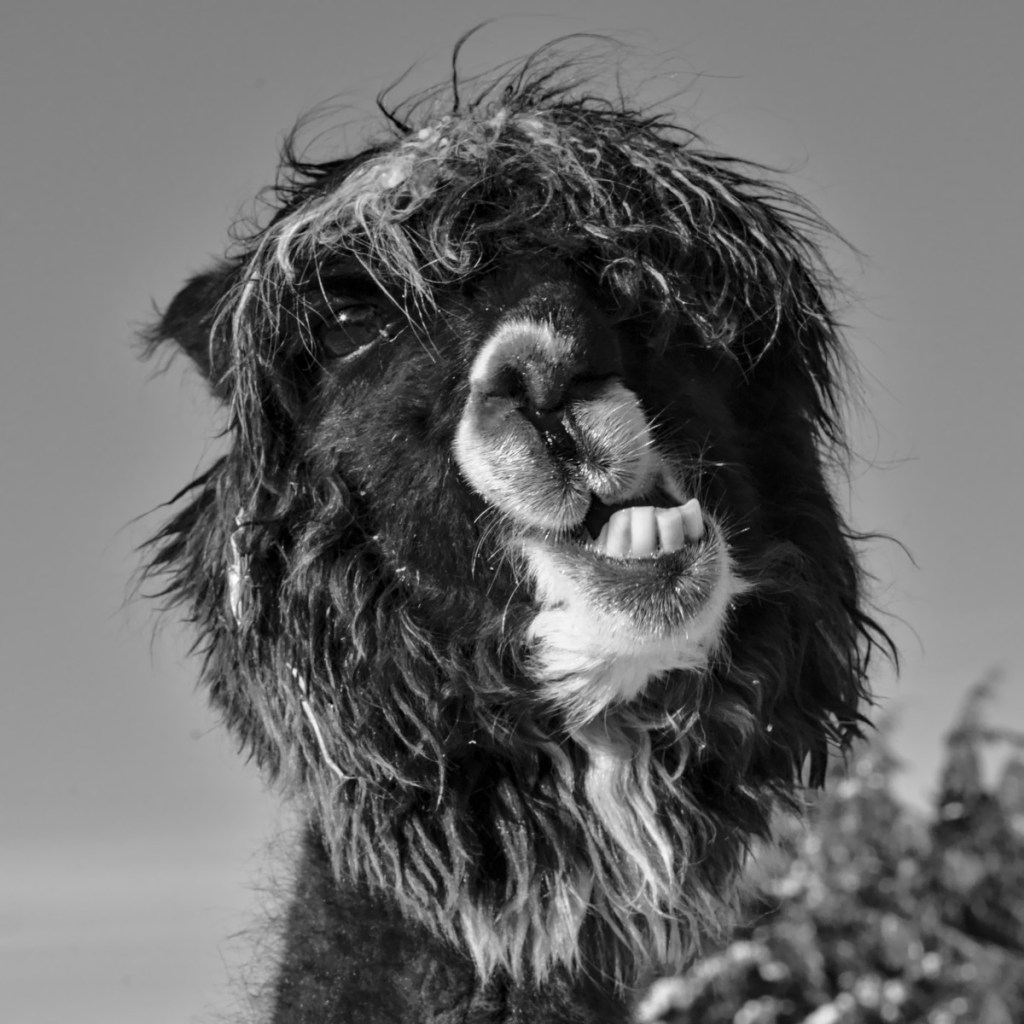
To see an animal look at you in pain, or anger, or fear, or mischief, or contentment, or suspicion, or familiarity: there is nothing mysterious here and, as meanings go, these are as basic as they come. They are things that people who work with animals take for granted and consider to go without saying. But they are not meanings that you can see from the city. They are not meanings that science can see. They are not meanings that can be captured in numbers, or data on a spreadsheet, or measured by profit and loss.
The tendency of the world nowadays – as it is coming to be dominated by the perspectives of the city, the sciences, and business – only increases the proportion of people who have no capacity to see these basic realities. Instead they see something else: a projection of their own making that imposes urban meaning onto the natural landscape.
People treat Nature as something to be looked at. They go to ‘Nature reserves’ and take photos or binoculars. They think they are connecting with nature, but can they not see how out of place they are? With their straight lines and plastic… Like a novice sitting down to play chess, it’s not enough to just put yourself in that place and learn what the pieces are called: you know some facts but there is still so much meaning you cannot see.
This meaning-blindness leaves us impoverished, as a species, disconnected from our nature and from Nature (which are the same). Without access to those deep natural meanings, the world will forever be shallow and artificial, flat and soulless: ‘all too human’. The lack of a liberal education might deny someone access to their full humanity, but the lack of access to Nature denies someone something worse: access to their full nature as a human being (and an animal) who is a part of the natural world.
Related post: Romanticism and Livestock Farming
 tobybetenson.com