-
What is the Problem of Evil?
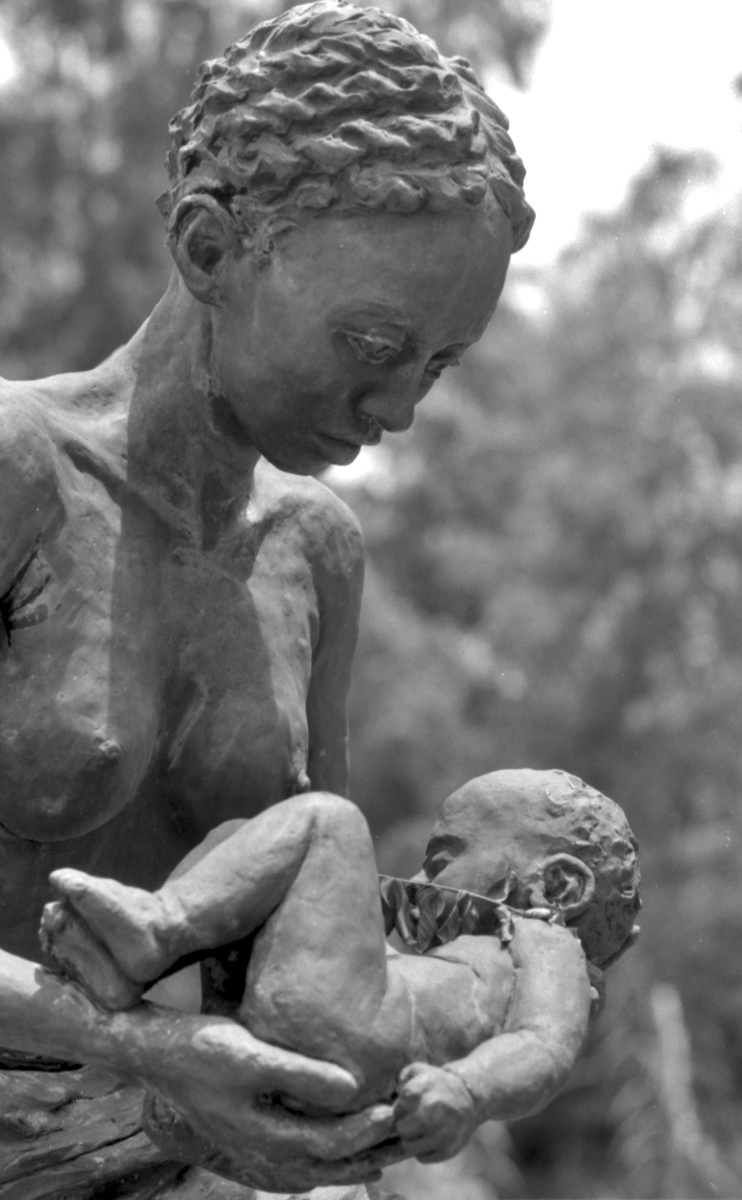
The problem of evil is the problem of reconciling belief in a good and powerful God with a sincere recognition of the evil and suffering that exists in our world. This problem is often expressed as an ‘inconsistent triad’: God is good; God is powerful; evil exists. It seems, at least at first glance, that if either two of these propositions are true then the third must be false. If God is good and powerful, then why would God let bad things happen to good people or otherwise innocent creatures? […] read more
-
The Meno: How to See What Isn’t Said
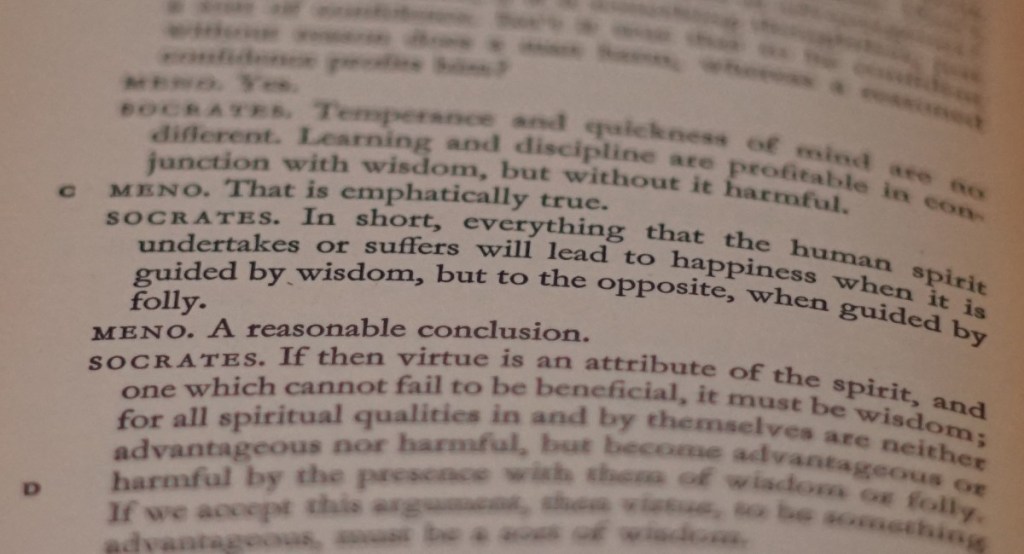
The Meno is one of the most complicated yet clear examples of Plato’s way of ‘showing one thing whilst saying something else’. Elsewhere I’ve described this as writing with layered intentions: on the surface there are some philosophical arguments with which you may or may not agree; beneath that there is a show of doing philosophy in a certain way; and beneath that there is a provocation to do it yourself. What’s on the surface isn’t really what the dialogue is about. […] read more
-
How To Read Plato
Academic philosophy ought to be teaching this but unfortunately it has become shallow and stupid. Or perhaps it thinks that students have become shallow and stupid and are only capable of understanding superficial arguments. Either way, it neglects what really matters, and too much is lost in that. When reading any of Plato’s dialogues, to understand them properly you need to remember these three things […] read more
-
The Value of Everything Depends on Ethical Goodness

Socrates says that virtue can make bad things good, whilst vice only makes good things bad. On the basis of this, he claims that virtue is sufficient for a good life. Socrates’ claim is very challenging. It’s often laughed at by his interlocutors, as if it’s expressing a kind of simple-minded childlike innocence, not worthy of a grown up. It’s too easy for us to take the same attitude. It’s too easy to dismiss Socrates as a kind of arch moraliser, telling us to ‘be good’ from a place of idle words. This would miss Socrates’ point entirely. Socrates isn’t… read more
-
What is a Good Life?

This is a difficult question. To answer it, you need to make sure you’re asking the right question in the right way. Consider any part of what you might traditionally (or stereotypically) think of as being essential to living a good life: wealth, property, success, family, love, confidence, popularity, freedom, power, status, productivity, etc., etc. These are the things that most people aim for […] read more
-
Shadow Chasing: Afterword
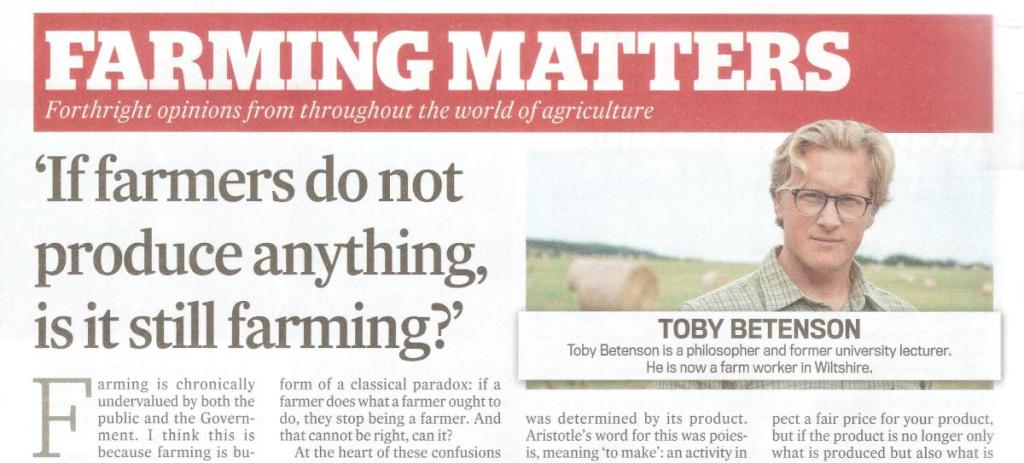
By sheer coincidence, the day I published a post about how ‘once upon a time I used to chase shadows but now I don’t do that anymore’ was the same day I caught a shadow that I’ve been chasing for a little while. While out shopping for food and nappies and cleaning products, I thought I’d check the magazine stand to see if they had a copy of a publication for which I’d notionally had an article accepted. And there I was, enigmatically-half-smiling back at me from the back page! I feel a rush of…pride? Satisfaction? I’m not sure, but… read more
-
Shadow Chasing
Over the past few years – having made an attempt to pursue philosophy as a way of life, to take it seriously and digest its lessons and not only treat it as an academic discipline – I’ve come to see new depths in old ideas. One example of this is the cynical little detail in Plato’s ‘Allegory of the Cave’. There, Plato suggests that these poor souls – imprisoned in a dark cave of ignorance and only able to look at the shadows on the wall in front of them – would esteem those who are best at discerning the… read more
-
Artificial Intelligence and the Illusion of Understanding
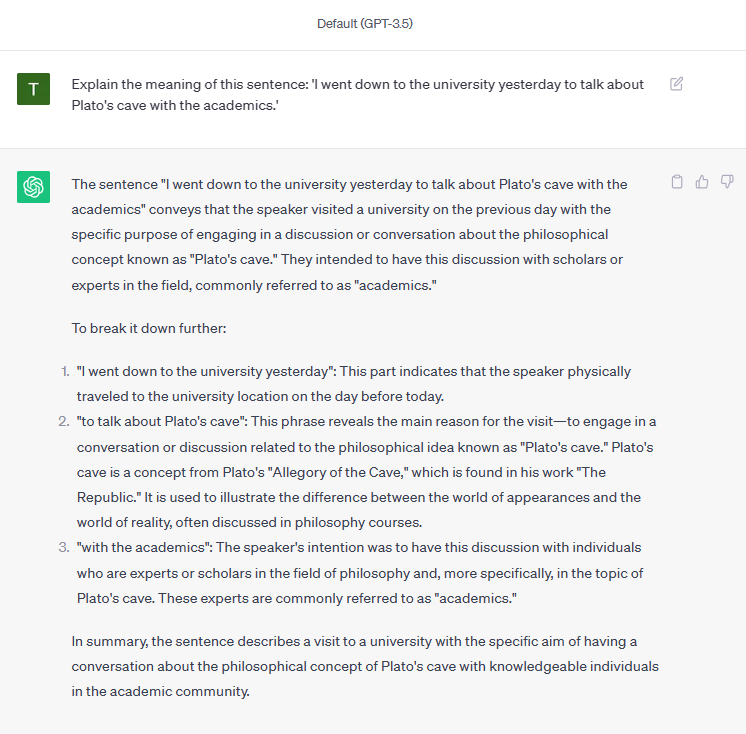
‘I went down to the university yesterday to talk about Plato’s cave with the academics.’ If I say this to an AI, it would miss everything that matters in this sentence and see everything that doesn’t. But if I say this to a philosopher they would reply: ‘I see you are making a point.’ Having had this thought for a while, I thought I’d put it to the test. read more
-
The Allegory of the Cave in Plato’s Republic

In Plato’s Republic, Socrates paints a strange picture. Imagine a cave, underground (as caves are), with no natural light. In this cave are people chained up and chained down; they can’t move a muscle, not even their heads from left to right, and they’ve been stuck like that forever. They’ve never known any different. They are stuck in a dark cave looking at the wall directly in front of them. On this wall are shadows cast from a fire behind them. Between the fire and the people and the wall is a little runway with a kind of shadow-puppet theatre.… read more
-
Healthy Cynicism

I’m not sure if Cynicism is healthy because I’m not sure what health is. But I do think that Cynicism has a healthy role to play: it is a healthy corrective to the nonsense of this world, the world that we have made for ourselves. My doubt serves as an introduction to a typically philosopher’s question. Not ‘is this or that thing healthy?’, which is a question we leave to the scientists, but ‘what is healthy’? What is the essence or best idea that we have of ‘health’? Here are some paradoxical answers characteristic of a Cynic’s idea: It is… read more

An experiment with philosophy as a way of life

