-
On Being Someone Who Has Something To Say
Being ‘someone who has something to say’ is a pre-requisite for any serious discussion. Without it, there’s a danger that anything said might be ‘mere words’. When Plato explains this requirement, he describes it as a harmony between logos and bios: your words align with your actions; your understanding is shown in your way of life. You say what you are and you are what you say. When there’s a disharmony in these things, it undermines what you say and, more importantly, who you are to say it.
-
Too Good to be Happy: A Paradox for the Good
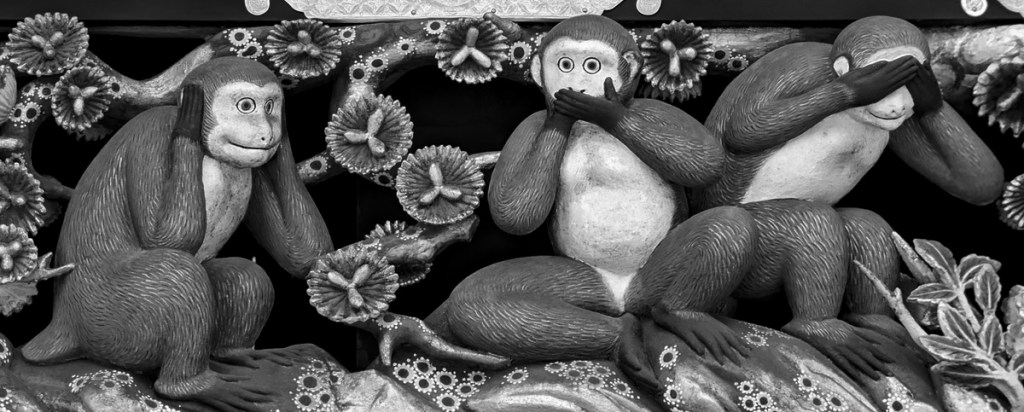
Justice is a part of our idea of goodness, unequivocally. But having a sense of justice makes you sensitive to injustice. With this sensitivity, any injustice is liable to make such a person miserable. And there doesn’t seem to be anything good about being miserable. That seems to me to be a paradox of goodness, whereby something unequivocally bad comes from something unequivocally good. Justice is good, and happiness is good, but having a sense of justice makes us less happy. Having one good seems to deprive us of another. I wonder what the solution to this puzzle might be.
-
What is Good Philosophy?
At any given time, philosophy is what philosophers do. Look at what philosophers do; look at the picture of success for philosophical activity as it is in this time. You might be disappointed by what you find.
-
Two Philosophical Approaches

Two approaches have been pre-eminently influential in philosophy. One approach says that we should trust what we think over what we see, because our perception is unreliable: we should place ‘mind over matter’. The other approach says that we should trust what we see over what we think, because our thinking is unreliable: we should place ‘matter over mind’. Both approaches have consequences, good and bad. […]
-
Aristotle’s Practical Wisdom

According to Aristotle’s view, wisdom lies in the ability to identify and choose the happy middle, for you, relative to yourself and your purposes. One part of this is philosophical: you need to look, think, and understand what the happy middle is, for you, for any given virtue. The other part is practical: you need to choose what you identify as the happy middle. This choice is an action; it is something that it done, not only something that is thought about. […]
-
Aristotle’s Happy Middle
Look around you, and have a think, and draw up a list of qualities that some people have that you admire or appreciate. What comes to mind? It’s not for Aristotle (or me) to list the virtues, nor identify their purposes, because you can do this for yourself based on your own observations and reflections. What Aristotle points out is that virtues are very important, but you can have too much of a good thing. […]
-
Translation Matters: The Ergon of Stoicism

I am no expert in translating ancient languages, but I know enough to recognise when a misunderstanding has become pervasive. In popular Stoicism, the important phrase that might lead people astray is: ‘in one word, whatever are our own actions.’ Alarm bells ought to be set ringing by the obvious contradiction there: whatever is said ‘in one word’ in ancient Greek is something that takes five words to say in English. But to what ‘one word’ does this phrase refer? […]
-
Translation Matters: The Happiness of Stoicism
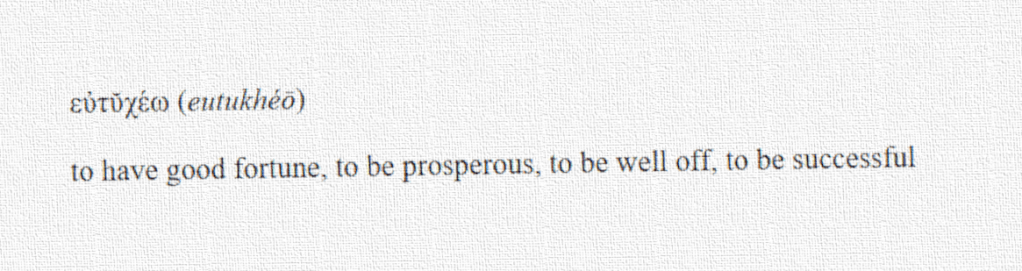
The meaning of the word ‘happiness’ has never been straightforward. Most of us aren’t clear what it means in our own language, let alone what it meant in an ancient one. This makes translation difficult. Most widely-available translations of ancient Stoic works think it easier to just say ‘happy’ and trust that people will understand more or less the right thing by that. But I think it’s an important word, and I’m not sure ‘happy’ is good enough. […]
-
Happiness, According to Aristotle
If everything we do, we do for the sake of happiness, what is happiness? What is it to live well? What is it we are aiming for? Aristotle’s answer here depends on his metaphysical categories. That’s enough to put some people off. But even if we are not on board with his metaphysical reasoning, the answer he gives is profoundly insightful and has been tremendously influential. It’s very much worth some serious consideration. […]
-
The Purpose of Life, According to Aristotle
What is a good life? What is ‘Good’? Socrates and Plato would say that these are very difficult questions to answer, requiring an almost other-worldly kind of wisdom. Not so for Aristotle, whose method brings us right down-to-earth. What is ‘Good’? Well, look around, what do you point at and say ‘that is good’? […]

An experiment with philosophy as a way of life
 tobybetenson.com