-
Pandering
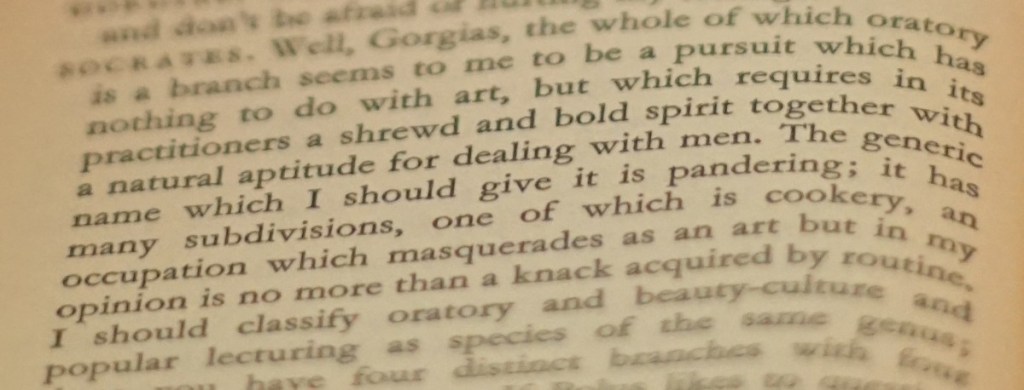
Recently, I’ve been running a series of posts about the problem of evil. Much of it is recycled from my book on the subject. The main motivation for this is SEO: I want to teach the Google bots that my writing here is what should be read, rather than my old academic writing. Ancient Greek philosophers had a word for this kind of thing: κολακεία. It is variously translated as ‘pandering’ or ‘flattery’. It means playing to the crowd. In my case, it means trying to give the Google bots what they can understand. […]
-
The Protagoras: How To See What Isn’t Said
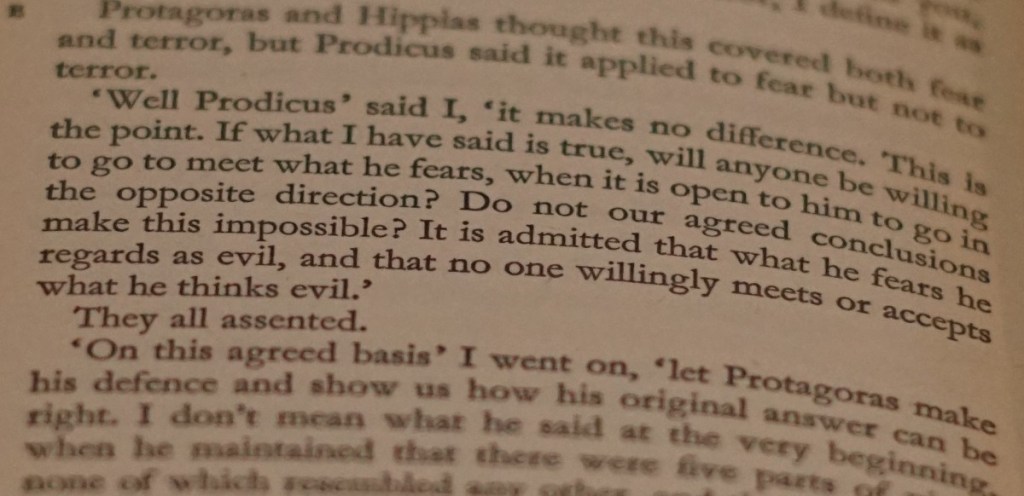
Read superficially, the Protagoras doesn’t appear to tell us much of any use that isn’t told better elsewhere – unlike the Meno, which has some more memorable features – so if you’re teaching (or learning) an introductory course on Plato, you might be inclined to skip this one altogether. That would be a shame, because it’s another excellent example of Plato’s ‘writing with layered intentions’; and if you can uncover the meaning in the Protagoras, you will be well-equipped to discover more meaning in the other Platonic dialogues. […]

An experiment with philosophy as a way of life
 tobybetenson.com