-
Plato’s Dualism and the Priority of the Intelligible World

What is philosophy, when it’s not Socrates asking a lot of questions? It is the exercise of reason. We apply our intellectual powers to a problem and try to think it through. Plato, a student of Socrates, slowly moves into this realm of pure thinking. This shift in emphasis leads Plato to make an important discovery: there is a world that we see with our eyes and a world that we see with our minds. […] read more
-
Natural Self-Interest

Over the ages, many philosophers have looked to ground ethics in our natural and apparently innate tendency towards self-preservation. It is often termed ‘self-love’: we have a deep need to look after our own interests. An infant cries when its needs are not met; an adult wants what pleases it. This would seem to be a truth so universal that we would call it a natural law, like gravity. […] read more
-
Two Philosophical Approaches

Two approaches have been pre-eminently influential in philosophy. One approach says that we should trust what we think over what we see, because our perception is unreliable: we should place ‘mind over matter’. The other approach says that we should trust what we see over what we think, because our thinking is unreliable: we should place ‘matter over mind’. Both approaches have consequences, good and bad. […] read more
-
Plato’s Tripartite Soul
Reflect on yourself: your personality, your desires, your actions and thoughts, your body, whatever you care to think of as being something that makes you what you are. Do you find it to be in unified agreement, pushing you in the one same direction, or do you find it to be in disagreement, pulling you in different directions at one time or another or even at the same time? For me, as I suspect would be true for many people, it is the latter. […] read more
-
Aristotle’s Practical Wisdom

According to Aristotle’s view, wisdom lies in the ability to identify and choose the happy middle, for you, relative to yourself and your purposes. One part of this is philosophical: you need to look, think, and understand what the happy middle is, for you, for any given virtue. The other part is practical: you need to choose what you identify as the happy middle. This choice is an action; it is something that it done, not only something that is thought about. […] read more
-
Aristotle’s Happy Middle
Look around you, and have a think, and draw up a list of qualities that some people have that you admire or appreciate. What comes to mind? It’s not for Aristotle (or me) to list the virtues, nor identify their purposes, because you can do this for yourself based on your own observations and reflections. What Aristotle points out is that virtues are very important, but you can have too much of a good thing. […] read more
-
Translation Matters: The Ergon of Stoicism
I am no expert in translating ancient languages, but I know enough to recognise when a misunderstanding has become pervasive. In popular Stoicism, the important phrase that might lead people astray is: ‘in one word, whatever are our own actions.’ Alarm bells ought to be set ringing by the obvious contradiction there: whatever is said ‘in one word’ in ancient Greek is something that takes five words to say in English. But to what ‘one word’ does this phrase refer? […] read more
-
Relative Moral Certainty

Many judgements about the morally impossible will remain epistemically ambiguous and subject to change over time. Many philosophers who do not share my metaethical perspective will think this is a problem for any claims about moral necessity. But I think the issue of epistemic ambiguity actually reinforces my point, rather than weakening it, because this epistemic ambiguity is always relative to something more certain. […] read more
-
Plato’s Political Philosophy
It might sound odd to say that Plato’s discussion of political philosophy shows us important truths about how to live well. For many of us, thinking about politics is likely to make us feel more anxious and depressed, not less. But it makes more sense when you consider why Plato is discussing political philosophy in the first place. […] read more
-
Translation Matters: The Happiness of Stoicism
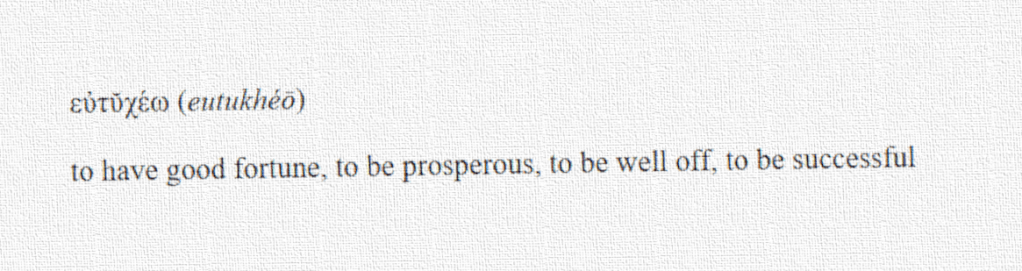
The meaning of the word ‘happiness’ has never been straightforward. Most of us aren’t clear what it means in our own language, let alone what it meant in an ancient one. This makes translation difficult. Most widely-available translations of ancient Stoic works think it easier to just say ‘happy’ and trust that people will understand more or less the right thing by that. But I think it’s an important word, and I’m not sure ‘happy’ is good enough. […] read more

An experiment with philosophy as a way of life

