-
The Doctor and the Donut Seller
Imagine you’re a doctor: all you want is to heal the patients in your care. Your place of work, your hospital, in a drive for profitability (forced by a withdrawal of government support) is taken over, first partially but then as a majority share, by a company that makes donuts and sugary soft drinks. At first nothing much changes: you can carry on with your work as you were and have always been, except the canteen now stocks donuts and sugary soft drinks. But then at some point requests are made, from on high, to include more recommendations for donuts…
-
On the Failure of Public Philosophy
What we see today, in philosophy’s public lack of stature, is the end result of a downward slide that started 40 years ago when the balance was tipped against a certain idea of what a university is and ought to be.
-
Reflections on ‘The Lives of Animals’
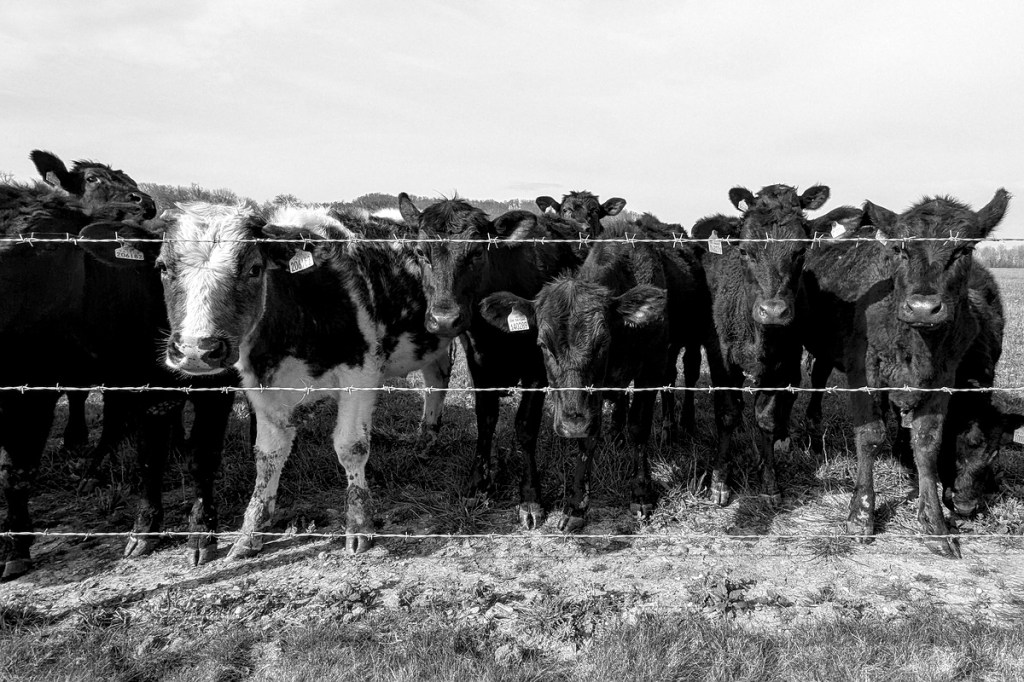
In the morning I’m on the farm as an extra pair of hands while some young cattle are being de-horned. In the afternoon I’m reading J.M. Coetzee’s ‘The Lives of Animals’ for the first time.
-
Product and Purpose
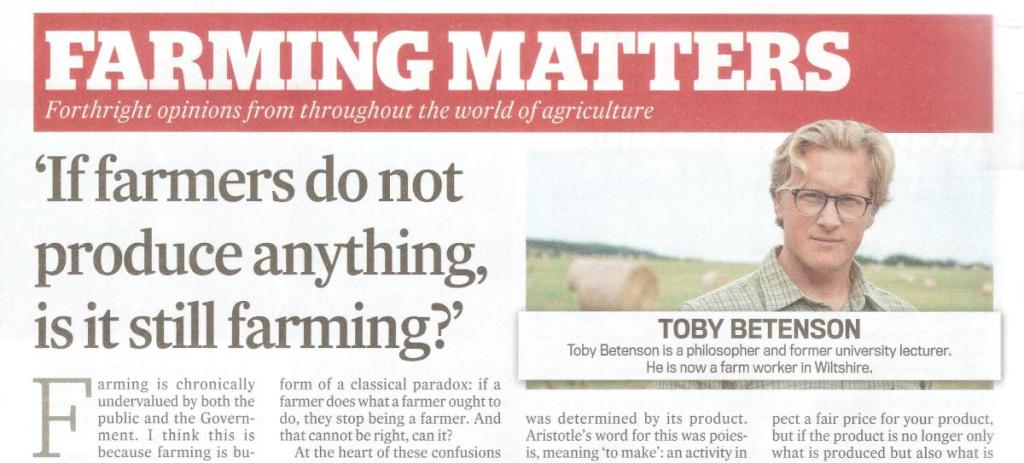
Some people fail to see a distinction between the product of an activity and its purpose. This isn’t always and everywhere a failure to see things as they really are, since sometimes there is no distinction to be drawn. But when it is a failure it can lead to serious consequences. Because what follows from it: to come to define something’s purpose by its most visible product and then measure its value in those terms.
-
Antinomy
Science is offered in support of everything nowadays, true and false, good and bad. Without a capacity to distinguish the difference between good and bad science, ‘the science’ means nothing. How do you develop a capacity to distinguish between good and bad science?
-
A Strange Play
I saw a strange play the other day. I’m still not sure what to make of it. It didn’t make much sense to me, but maybe it can make some sense to you? In the first act, a player strutted onto the stage in full costume, wearing a grotesque and elaborate mask. He said ‘I am a demon’ and launched into so many angry tirades against society. He accused everyone of being guilty of living in contradiction with themselves, denouncing the rich as poor, the powerful as weak, the knowledgeable as ignorant, and the beautiful as ugly. He said the…
-
Esoteric Protreptics
1. Society will support whatever it values. Society does not support philosophy. Evidently, society does not value philosophy. Philosophers should put all their efforts into demonstrating the value of what they do. 2. The value of philosophy can only be seen by those who understand it. Few people understand philosophy. Consequently, few people can see the value of philosophy. Philosophers should put all their efforts into enabling people to understand philosophy. 3. Understanding philosophy requires significant philosophical education. Society will not support significant philosophical education. Consequently, philosophy is in serious trouble. Determined to be dismissed as worthless good-for-nothings, philosophers should…
-
Reflections on the Fate of Philosophy in the University
I wonder if it’s easier to see what might be on the other side of the wall once you’re on the other side of the wall? When I left the university I asked: ‘how can philosophy survive without the university?’ Now I wonder if philosophy can only survive without the university. The university, as it’s become in the past few decades, has made philosophy unrecognisable to itself. It is a version of philosophy in which Callicles is the ideal, not Socrates. That a philosopher would now encourage someone not to pursue philosophy for monetary reasons… If the university is a…
-
Cog Ergo Sum: A Very Short but Timeless Story About How a Man Makes Something of Himself
He began life as all life begins: free and completely dependent. He was taken care of by people who cared for him until he came to consciousness and realised that he could take care of himself. He started to learn how to take care of himself. When he showed how he could take care of himself, he was praised. ‘You’ve done well’, they said, ‘and you should be rewarded.’ He agreed. He had done well. He decided he should learn some things in order to take better care of himself. He went to school and learned some things. He was…

An experiment with philosophy as a way of life

