-
Attend to What Matters: Eutukhéō or ‘fortunate’

‘If you attend to what matters you will recognise how fortunate you are and this is the ultimate condition to be aimed at.’
-
Attend to What Matters: Freedom

My life is currently very constrained. I am occupied with looking after our 18-month old daughter. When she is awake, I am fully occupied; when she is asleep, I am on call and cannot go further than the effective range of the baby monitor.
-
Palinode to the Rion

I recently wrote a satirical piece about popular philosophy. I was happy enough with it to put it online, because I think what it shows is interesting, but beyond that the net effect was to leave me thinking I probably won’t do this kind of thing anymore. As I recently seem to have discovered, I am currently writing to discover why I write, and what I seem to have discovered here is that, whilst I’m happy enough to write things that show something important about philosophy, I have no interest in writing anything combative, critical, or ‘snotty’. […]
-
The Rion: An Ancient Dialogue for Our Times
The Exile: Very nice to meet you, Rion. Am I talking to you at home? Rion: No, I’m in a hotel just outside of Bullton right now; I’ve been here to give a talk at a conference on mental health. Ex: And did they have many philosophers talking at the conference? Ri: Oh for sure, quite a lot, and lots of other writers and YouTubers. Ex: And how do you think your talk went down? Ri: It was a sell out! And it was live-streamed; mine had the most hits and likes of all of the talks. Ex: Congratulations! Presumably…
-
Do not argue about what a good life is: live it

You need to think well in order to live well, and coming to understand what it is to think and live well is the proper business of philosophy. The process of philosophy, with all its theories and methods and technical discourse, is necessary to gain this understanding, but it is not the final end of this activity. We should at some point leave it behind. […]
-
Natural Self-Interest

Over the ages, many philosophers have looked to ground ethics in our natural and apparently innate tendency towards self-preservation. It is often termed ‘self-love’: we have a deep need to look after our own interests. An infant cries when its needs are not met; an adult wants what pleases it. This would seem to be a truth so universal that we would call it a natural law, like gravity. […]
-
Translation Matters: The Ergon of Stoicism
I am no expert in translating ancient languages, but I know enough to recognise when a misunderstanding has become pervasive. In popular Stoicism, the important phrase that might lead people astray is: ‘in one word, whatever are our own actions.’ Alarm bells ought to be set ringing by the obvious contradiction there: whatever is said ‘in one word’ in ancient Greek is something that takes five words to say in English. But to what ‘one word’ does this phrase refer? […]
-
Translation Matters: The Happiness of Stoicism
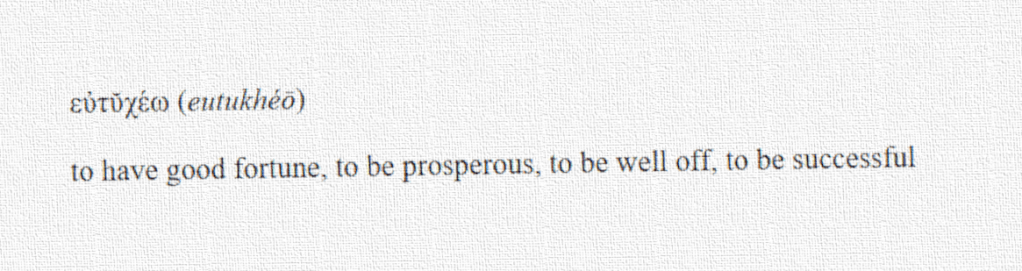
The meaning of the word ‘happiness’ has never been straightforward. Most of us aren’t clear what it means in our own language, let alone what it meant in an ancient one. This makes translation difficult. Most widely-available translations of ancient Stoic works think it easier to just say ‘happy’ and trust that people will understand more or less the right thing by that. But I think it’s an important word, and I’m not sure ‘happy’ is good enough. […]
-
Good Enough
I am convinced that virtue is necessary for happiness. I am not convinced that it’s sufficient. But knowing that it is necessary to be good is good enough for me.
-
Philosophy is Lost
Philosophy has lost its way. It is inconsistent with itself. It is not living in conformity with its nature. It believes itself to be profound and important, but what is characteristic of its daily activity is trivial and it produces trivialities.

An experiment with philosophy as a way of life
 tobybetenson.com